
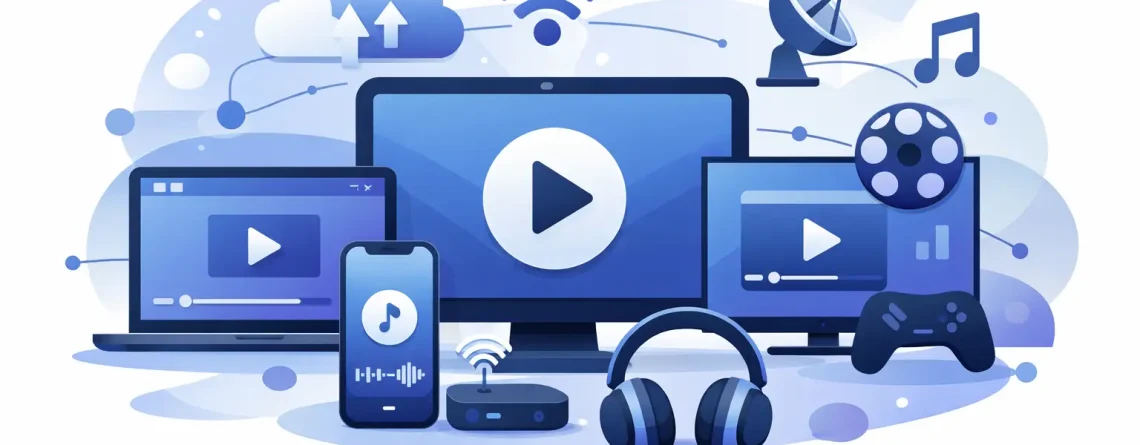
What Is Multimedia Streaming and How It Works
A live game starts at 7:00, your movie loads in seconds, and someone else in the house is watching news on another screen. That everyday convenience comes from one thing: what is multimedia streaming. It is the process of delivering video, audio, and other media over the internet in real time, so you can start watching or listening without waiting for the entire file to download.
For most people, streaming feels simple. Tap a channel, hit play, and the content starts. Behind that fast experience is a system built to move media in small pieces, send it across networks, and play it smoothly on your device. If you are comparing cable, apps, and IPTV services, understanding streaming helps you see what you are really paying for – and what kind of viewing experience you can expect.
What Is Multimedia Streaming?
Multimedia streaming is the online delivery of media content such as live TV, sports, movies, music, and on-demand shows in a continuous flow. Instead of downloading one large file before playback begins, your device receives data in small chunks and plays it almost immediately.
That is why streaming works so well for entertainment. You do not need to wait ten minutes for a program to finish downloading before you can watch the first minute. The content arrives while you are already watching it.
The word multimedia matters here. It does not just mean video. It includes audio, subtitles, graphics, live broadcasts, and interactive content delivered together or separately. When you open a live TV app, hear commentary, see the picture, and choose captions, you are using multimedia streaming.
How Multimedia Streaming Works
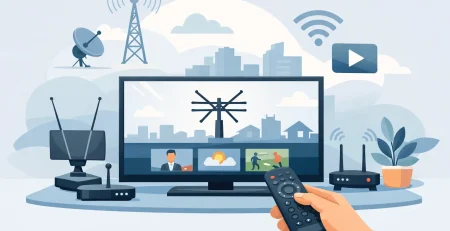
At its core, streaming is about speed, timing, and delivery. A media source, such as a live sports feed or movie server, breaks content into smaller packets of data. Those packets travel across the internet to your phone, smart TV, tablet, laptop, or streaming box. Your device then reassembles and plays them in the right order.
A media player does the heavy lifting. It buffers a small amount of data ahead of playback so the show keeps running even if your connection has minor fluctuations. That buffer is the reason a stream can continue for a few seconds even when your internet speed briefly drops.
There are two common types of streaming. Live streaming delivers content as it happens, like sports, breaking news, or a live event. On-demand streaming pulls stored content from a server whenever you choose to watch it, like movies or past episodes.
The result is the same from the viewer side: quick access, no large local downloads, and the freedom to watch on different devices.
Why Multimedia Streaming Took Over Home Entertainment
Cable built its business on fixed schedules, hardware rentals, and higher monthly bills. Streaming changed that by giving viewers control. You choose what to watch, where to watch it, and often how much you want to spend.
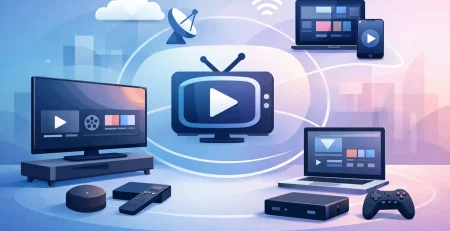
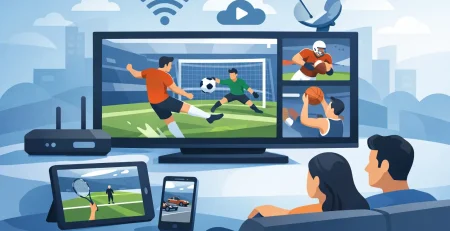
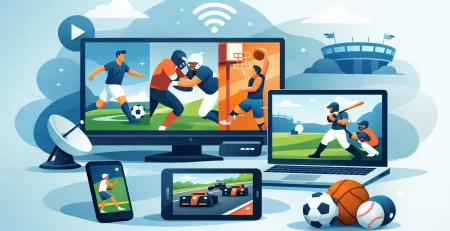
That flexibility is a major reason so many households moved away from traditional TV packages. Streaming supports modern viewing habits. One person wants live sports in the living room. Another wants international channels on a tablet. Someone else wants a movie on their phone. Streaming makes that possible without tying everyone to one cable box.
It also fits the way people buy entertainment now. They want fast setup, simple access, and fewer barriers. No technician visit. No long contract. No complicated install process. In many cases, activation can happen within minutes.
For price-conscious viewers, the value is even clearer. Streaming services often offer more channel variety and device flexibility at a lower cost than cable. That does not mean every service is equal, but it explains why streaming has become the first choice for millions of households.
What Affects Streaming Quality?
If you have ever seen buffering during a big game, you already know that not all streaming experiences are the same. Quality depends on several factors working together.
Your internet speed is the first one. Higher-quality video needs more bandwidth. Standard definition uses less data, while HD and higher resolutions need a stronger and more stable connection. But raw speed is not everything. Connection stability matters just as much.
Your device also plays a role. A newer smart TV or streaming box typically handles apps and video decoding better than an older device. Router quality can matter too, especially in larger homes where Wi-Fi signals weaken across rooms.
Then there is the source itself. A well-managed streaming service with optimized delivery, strong servers, and broad device support usually performs better than a service with overloaded systems. During high-demand events, such as major sports broadcasts, provider quality becomes even more important.
It depends on the full setup, not just one number on your internet bill.
What Is Multimedia Streaming Used For?
Entertainment is the biggest use case, but it is far from the only one. Multimedia streaming powers live television, sports packages, movie libraries, music platforms, podcasts, online radio, video meetings, webinars, digital classrooms, and gaming broadcasts.
For TV viewers, the appeal is obvious. Streaming combines live channels, premium content, and on-demand access in one internet-based experience. Instead of being limited by local cable lineups, viewers can access broader national and international programming across multiple devices.
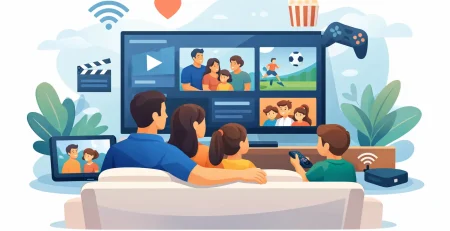
That is especially useful for families and shared households. One subscription can often support viewing across several screens, which makes streaming a much better fit for real-life home use than old-school TV setups.
Multimedia Streaming vs Downloading
People sometimes confuse streaming with downloading, but they are not the same. When you download a file, the entire file is saved to your device before you use it. When you stream, playback begins while the data is still arriving.
Streaming is faster and more convenient for most entertainment because it cuts the wait time. It also saves local storage space. You do not need to keep full movie files on your phone or laptop just to watch one time.
The trade-off is that streaming depends on internet access. A downloaded file can still work offline, while a stream usually needs an active connection. For live TV, that is not really a downside, because the whole point is watching content as it is being delivered.
Why Streaming Works So Well for Live TV and IPTV
Live TV is where streaming really shows its strength. Instead of relying on older broadcast systems or expensive cable infrastructure, IPTV and similar internet-based services deliver channels directly over your internet connection. That means faster setup, broader compatibility, and more flexibility for viewers who want control.
For households trying to cut costs without giving up sports, news, movies, and international channels, this model makes sense. You get modern access without the old cable headache. On a strong setup, the experience can feel just as immediate, while giving you more freedom to watch across smart TVs, phones, laptops, and other devices.
This is also why providers focused on affordability and fast activation continue to grow. Viewers want a service that starts quickly, works on the screens they already own, and supports more than one user at a time. That is exactly the kind of value IPTV services like Crypto PAY IPTV are built around.
Common Streaming Problems and What They Really Mean
Buffering usually points to a speed or stability issue, but not always. Sometimes the home network is crowded. Sometimes the stream source is under heavy load. Sometimes an older device struggles to keep up.
Lag in live content can happen because streaming platforms use short delays to keep playback stable. That is normal, especially during live sports. Low picture quality often means the system automatically reduced resolution to avoid interruptions.
The important point is this: a bad stream is not proof that streaming itself is flawed. It usually means one part of the chain needs improvement, whether that is internet strength, device performance, Wi-Fi coverage, or provider quality.
What to Look for in a Streaming Service
If you are choosing a service, focus on practical value. Channel variety matters, but so does stream stability. Device support matters, but so does ease of setup. A low price is great, but only if the service actually performs when you want to watch.
For many buyers, the best option is not the one with the flashiest pitch. It is the one that gives reliable access, clear picture quality, fast activation, and enough connections for the whole household. That combination is what turns streaming from a tech feature into a better everyday TV experience.
Multimedia streaming is not some complicated buzzword. It is the technology behind the fast, flexible, lower-cost way people watch TV now – and once you understand that, choosing a smarter viewing setup gets a whole lot easier.


Leave a Reply