

What Is Dual Streaming and How It Works
One TV is playing the game in the living room. Another screen is running cartoons in the bedroom. Nobody is fighting over the remote, and nobody is waiting their turn. That is exactly why people ask, what is dual streaming, and whether it actually makes a difference when choosing a TV service.
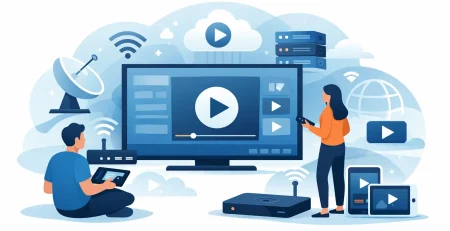
Dual streaming means you can watch content on two devices at the same time using one account or one subscription, depending on the provider’s rules. In plain terms, it is built for real households. One person watches live sports, another watches movies, and both streams run simultaneously. For families, couples, roommates, and anyone tired of single-screen limits, that is a major upgrade.
What is dual streaming?
The simplest answer to what is dual streaming is this: it allows two separate streams to run at once under the same service plan. Those streams can be on two TVs, a TV and a phone, a tablet and a laptop, or any other supported combination.
This matters because modern viewing is not a one-screen habit anymore. People watch in different rooms, on different schedules, and on different devices. A service that limits you to one stream can feel outdated fast. Dual streaming gives you breathing room without forcing you to buy a second full subscription.
That said, not every provider means the same thing when they say it. Some allow two live streams on any channels. Others may limit dual streaming to certain apps, networks, or device types. Some count every active login, while others only count content that is actually playing. The feature sounds simple, but the details matter.
How dual streaming works in real life
When a provider offers dual streaming, it assigns your plan the ability to support two active sessions at the same time. Once one stream is already running, a second device can log in and start watching without kicking the first person off.
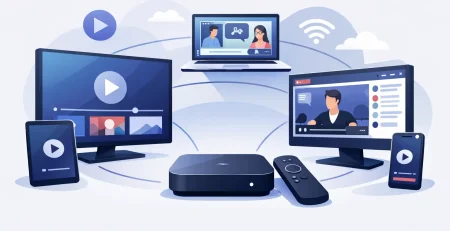
For example, you might have one stream on a smart TV in the den and another on a smartphone while someone travels or relaxes in another room. If the service supports it properly, both sessions stay stable as long as your internet speed can handle them.
That last part gets overlooked. Dual streaming is not only about the subscription. It also depends on your home network. Two HD streams need more bandwidth than one. If your internet is slow, overloaded, or unstable, the problem may not be the provider at all. You may have permission for two streams but not enough speed for both to run well at the same time.
Why dual streaming matters for IPTV users
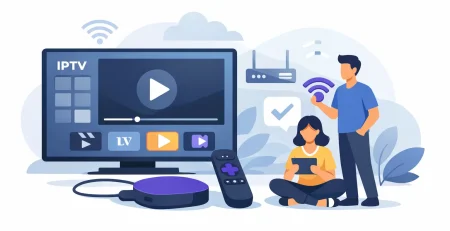
For IPTV customers, dual streaming is one of the most practical features you can get. The whole point of IPTV is flexibility. People want live TV, sports, movies, and international channels without the bloated cost and restrictions of cable. If the service works on multiple devices but only one person can watch at a time, that flexibility shrinks fast.
Dual streaming fixes that. It gives households more freedom without turning a budget-friendly service into an expensive one. If one person wants local channels and another wants a movie channel, both can watch at once. If one user prefers a smart TV and another uses a Firestick, tablet, or phone, the setup still makes sense.
For price-conscious households, this is where value becomes real. You are not just buying channel access. You are buying fewer interruptions, fewer arguments, and more ways to use the service the way your home actually lives.
Dual streaming vs multi-device support
This is where many shoppers get confused. A provider may advertise broad device compatibility, and that sounds great. But compatible does not always mean simultaneous.
A service can work on ten kinds of devices and still allow only one active stream at a time. In that case, you can install the app on a smart TV, phone, tablet, and laptop, but only one of those can actually play content at any moment.
Dual streaming is different. It is not about where you can sign in. It is about how many streams can play at once. That is the number that really affects your day-to-day experience.
If you are comparing services, this is one of the smartest questions to ask before you pay. Not just, “Will this work on my devices?” Ask, “How many devices can stream at the same time?” That answer tells you much more about actual value.
What is dual streaming good for?
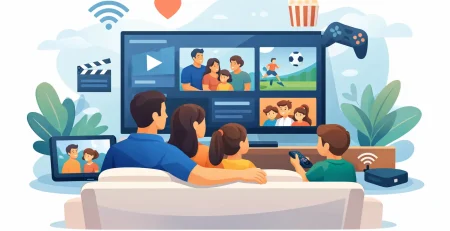
Dual streaming is ideal for couples, families, roommates, and anyone who splits viewing across rooms. It is also useful for people who start a show on one device and need a second stream active elsewhere in the house.
It works especially well for live TV habits. Sports are a perfect example. One person wants the main game. Another wants news, kids content, or a movie. With one stream, somebody loses. With two streams, everyone gets what they want.
It is also handy for travel and mixed-device use. One stream can stay active at home while another runs on a phone or tablet. Some providers allow that easily. Others may flag different locations or IP addresses. Again, the details matter, so users should always check the service rules.
The limits and trade-offs to know
Dual streaming is useful, but it is not magic. There are a few trade-offs worth knowing before you build your expectations around it.
First, dual streaming does not guarantee perfect quality if your internet cannot support it. Two HD or high-bitrate streams can stress a weak connection. If your picture buffers, freezes, or drops quality during peak hours, your network may be the bottleneck.
Second, some providers enforce connection limits aggressively. If a third device starts streaming, one of the first two may get disconnected. That is normal behavior on plans with a hard two-stream cap.
Third, account sharing rules can vary. Some services are built for one household. Others are stricter about where and how concurrent streams are used. If you assume dual streaming means unlimited sharing with friends outside your home, you may run into issues.
Finally, channel performance can vary by source, app, and device. A service may support dual streaming well on one setup but feel less stable on older hardware or weaker Wi-Fi. The feature is only as good as the full setup behind it.
How to tell if a service offers real dual streaming
The fastest way is to look for a clear statement about simultaneous connections. That language matters more than broad marketing phrases like multi-device support or watch anywhere.
If a provider says you can use the service on multiple devices, but says nothing about simultaneous viewing, do not assume dual streaming is included. The same goes for offers that mention installations on several screens without defining active stream limits.
Real dual streaming is usually described in one of these ways: two simultaneous streams, two active connections, or two devices at the same time. If the wording is vague, ask before subscribing.
This is also where strong IPTV services stand out. A provider built for modern households should make concurrent viewing simple, clear, and fast to activate. Customers do not want fine print surprises after checkout. They want to sign in and start watching on the screens they actually use.
What is dual streaming worth to your household?
If you live alone and watch on one screen most of the time, dual streaming may feel like a nice extra rather than a must-have. But for most households, it becomes valuable almost immediately.
Think about how people really watch TV now. Someone is catching a live match. Someone else is watching on a tablet. Another person wants international channels in another room. Even in smaller homes, viewing habits overlap. The old cable model of one main TV no longer fits how people consume content.
That is why dual streaming often feels less like a luxury and more like the baseline for convenience. It gives your subscription room to fit your life instead of forcing your life to fit a single screen.
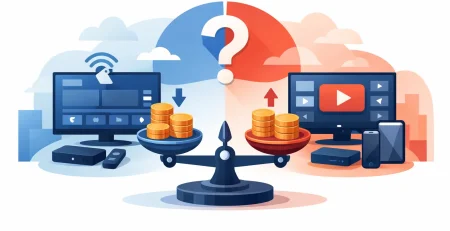
For buyers looking at IPTV options, this feature can be a smart tiebreaker. Price matters. Channel count matters. Device support matters. But if two people cannot watch at once, the service may not deliver the value it promises. That is one reason many customers look for flexible plans from providers like Crypto PAY IPTV, where convenience and multi-screen use are part of the appeal.
The best setup is the one that matches your actual habits. If your home has overlapping viewers, dual streaming is not just a technical feature. It is the difference between a service that feels limited and one that feels ready the moment you turn it on.
When you are comparing streaming plans, think past the sales pitch and picture a normal evening at home. If two screens are better than one for your household, the right answer becomes pretty obvious.



Leave a Reply