
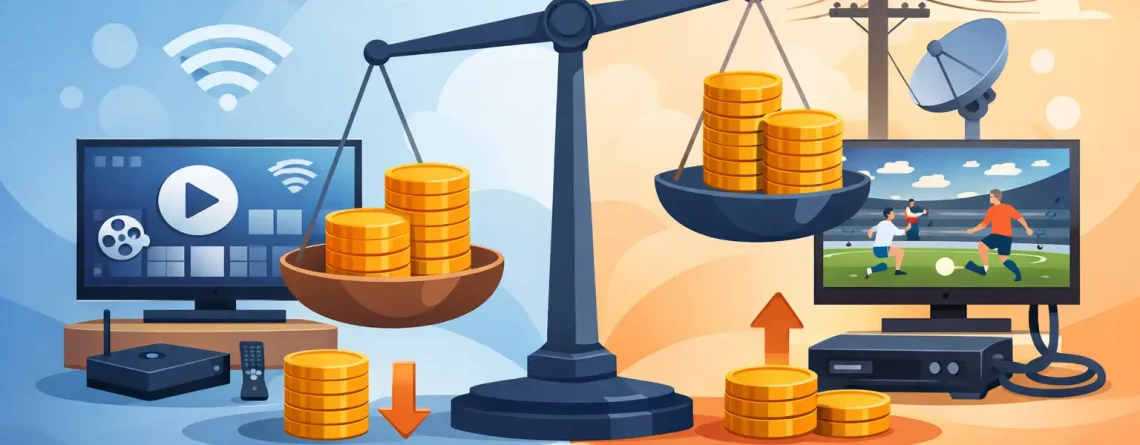
IPTV vs Cable Cost: Which Saves More?
That $180 cable bill stops being “normal” the second you look closely at what you’re actually paying for. The real IPTV vs cable cost debate is not just about the base monthly price. It’s about fees, contracts, extra boxes, channel access, and how many people in your home can watch without driving the bill even higher.
For a lot of US households, cable feels familiar, but familiar is expensive. IPTV is winning attention for one simple reason – it gives viewers a cheaper path to live TV, sports, movies, and international channels without the usual cable baggage. If your goal is more content for less money, the gap matters.
IPTV vs cable cost at a glance
Cable usually starts with a promotional price that looks manageable. Then the bill grows. Broadcast fees show up. Regional sports fees get added. Equipment rental appears. DVR service can cost extra. If you want TV in more than one room, you often pay for each additional box.
IPTV pricing is usually much more direct. You pay for access to the service, log in on compatible devices, and start watching. That difference changes the math fast, especially for families or households that stream across TVs, phones, tablets, and laptops.
A cable customer might think they are signing up for a $70 or $90 package, but end up much closer to $130, $160, or more after fees and equipment. An IPTV user is often comparing that to a lower flat subscription that includes far more channel variety and multi-device access.
Why cable bills climb so fast
Cable providers are experts at making the first number look better than the final number. That is where many people get trapped. The advertised package price is rarely the full monthly cost.
The biggest issue is add-on charges. Local broadcast fees and sports surcharges can push a bill up before you even add premium features. Equipment rental is another major expense. One box in the living room may seem harmless, but once you add another bedroom or office TV, the bill rises again. Over a year, those “small” charges are not small.
There is also the contract problem. Many cable plans use promotional pricing for a limited period. When that period ends, the monthly rate jumps. That means the price you signed up for is not always the price you keep. If you want to cancel early, there may be penalties.
That structure works well for the provider. It rarely works well for budget-conscious viewers.
What makes IPTV pricing different
IPTV flips the value model. Instead of tying the service to rented hardware and a fixed in-home setup, it delivers TV over the internet to supported devices. That lowers friction and often lowers cost.
For many users, the value is obvious right away. You can watch on a smart TV, phone, tablet, laptop, or streaming device without building your whole entertainment setup around a cable technician visit. Setup is faster. The pricing is often lower. The flexibility is much better.
That matters even more in households where more than one person watches different content. If parents want live channels, kids want entertainment, and someone else wants sports on another screen, IPTV often handles that much better from a cost standpoint than stacking cable boxes around the house.
A price-conscious household is not just buying TV access. It is buying convenience, speed, and the ability to watch where and how they want. IPTV usually wins that test.
Monthly cost is only half the story
If you compare IPTV vs cable cost fairly, you have to look beyond the monthly number. Real value comes from what the household gets for the money.
Cable may still appeal to viewers who want a traditional provider relationship and a familiar interface. Some people like the simplicity of one bundled bill for TV and internet, even if that bundle is not always a true bargain. But once you break down content access per dollar, cable often looks weak.
IPTV generally offers broader channel variety, including sports, movies, local options, and international programming, for a fraction of what many cable subscribers pay. That is where the cost comparison gets serious. Paying more might make sense if you are getting dramatically better service. For many viewers, that is not what cable delivers.
Instead, they are paying more for older delivery methods, less flexibility, and more billing friction.
The hidden cost of equipment
One of the biggest cable problems is how hardware multiplies cost. The living room box is only the beginning. Need service in three rooms? Expect the bill to reflect it. Want DVR capability? Add more. Need upgraded equipment? Add more again.
With IPTV, the household often uses devices it already owns. That can be a major savings. Smart TVs, phones, tablets, Firestick-style devices, and laptops already fit into daily life. There is no need to pay monthly rental fees for the privilege of watching on a second or third screen.
This is exactly why IPTV looks stronger in larger households. The more screens you need, the more painful cable becomes. The more screens you want, the better IPTV value tends to look.
Channel variety and content value
Price alone does not close the deal. Content does. If a service is cheaper but too limited, the savings do not matter. The reason IPTV keeps gaining ground is that low cost often comes with huge channel access.
That means viewers are not just saving money. They are often getting more entertainment choices at the same time. Sports fans want live events. Families want movies and general entertainment. Many households also want international channels that cable may place in expensive specialty tiers or not offer well at all.
This is where IPTV stands out. It is built for people who want more than a local lineup and a few familiar channels. It is for viewers who want wide coverage across categories and devices without paying premium-cable-level pricing.
When cable might still make sense
A fair comparison needs some honesty. IPTV is not automatically the perfect fit for every person.
Cable may still work for users who strongly prefer traditional installation, provider-managed support for in-home hardware, or a long-standing bundle arrangement that includes internet and phone. Some users also feel comfortable staying with the service they have always used, even if the price is higher.
But that comfort comes at a cost. If you are mostly paying for routine, not better value, it is worth asking whether that monthly bill still makes sense.
For most viewers focused on savings, flexibility, and broad content access, cable’s case gets harder to defend.
Who saves the most with IPTV
The biggest winners are households that watch a lot across multiple screens. Families, sports fans, international viewers, and anyone tired of cable price inflation usually see the strongest value. The more cable-style extras you would need, the easier it is for IPTV to come out ahead.
Renters also benefit because they can avoid installation headaches. Travelers and second-home users like the flexibility. Viewers who want fast activation instead of waiting around for appointments see another advantage right away.
And for people who are simply done with high monthly TV bills, the choice becomes pretty clear. Lower cost plus wider access is a powerful combination.
What to check before switching
Before moving from cable to IPTV, think about your viewing habits. How many screens do you use? Do you care about international channels? Do you want sports, movies, and live TV in one place? How much are you really spending now once every cable fee is included?
Also consider your internet setup, since IPTV depends on a stable connection. For most modern households, that is already part of everyday life. If your internet is solid, the path to switching is usually simple.
Look for clear pricing, fast activation, broad device support, and responsive customer service. Those details matter because low pricing only feels like a win when the service is easy to start and easy to use. That is one reason services like Crypto PAY IPTV appeal to cost-driven viewers who want instant access, multi-device support, and a much stronger price-to-content ratio than cable can usually match.
The smarter cost move for most households
Cable had years to set the standard, but the old pricing model is showing its age. People do not want surprise fees, long contracts, or expensive boxes in every room. They want fast setup, real flexibility, and a monthly price that still looks good after the first bill arrives.
That is why IPTV keeps pulling viewers away from traditional TV packages. The savings are real, the setup is easier, and the content value is hard to ignore. If your household wants more channels, more freedom, and less monthly pain, this is one switch worth taking seriously.
The smartest TV bill is the one that gives you what you actually watch without charging you for everything you don’t.






Leave a Reply