
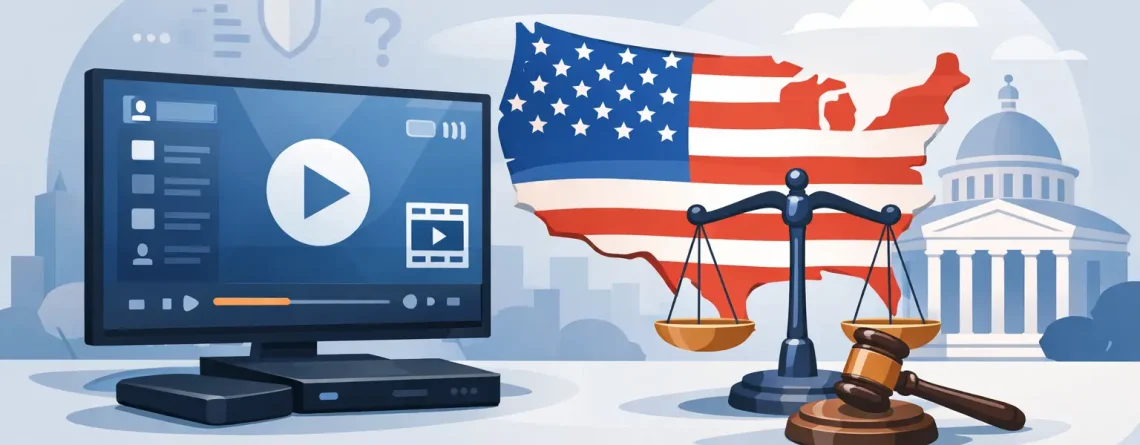
Are IPTV Subscriptions Legal in the US?
A cheap TV package with live sports, movie channels, and international content can look like an easy win. That is exactly why so many people ask, are IPTV subscriptions legal? The short answer is yes, sometimes. IPTV itself is legal technology. The real issue is whether the provider has the rights to distribute the content it sells.
That distinction matters. Plenty of people hear “IPTV” and assume it automatically means something shady. It does not. IPTV simply means television delivered over the internet instead of through old-school cable or satellite infrastructure. Major platforms use internet delivery every day. What makes one service legitimate and another risky is licensing, not the streaming method.
Are IPTV subscriptions legal or illegal?
IPTV subscriptions can be legal, illegal, or somewhere in a gray area depending on the provider, the country, and the content rights involved. In the United States, a service generally needs proper permission to stream live TV channels, sports broadcasts, movies, and premium content. If a company sells access to channels it does not have the rights to carry, that is where legal problems start.
For customers, the practical takeaway is simple. Paying for a subscription does not automatically make the stream legal. A polished website, instant activation, and a long channel list do not prove the service is authorized. What matters is whether the provider is operating with valid distribution agreements.
What makes an IPTV service legal?
A legal IPTV service has the right to deliver the content included in its package. That may come from direct agreements with networks, content owners, broadcasters, or authorized distribution partners. If those rights exist, the service is using IPTV as a delivery system, not as a shortcut around copyright law.
This is why legality is not really about the app, the box, or the device. A Fire TV, Android box, smart TV app, or mobile player is just a tool. The important question is whether the streams behind that tool are licensed.
In the US market, legal services tend to be more transparent about who they are, what they offer, and how they operate. They usually have clear business details, normal billing practices, defined terms of service, and content packages that make sense in the real world. If a provider promises every premium channel, every pay-per-view event, and every international package for next to nothing, that should raise eyebrows fast.
Legal IPTV usually looks normal
That may sound obvious, but it is useful. Legitimate services often behave like legitimate businesses. They explain what is included, price plans in a believable range, and do not rely on mystery branding or disappearing customer support. They may still be affordable, flexible, and fast to activate, but the offer is not built on impossible promises.
Content rights are the whole game
Sports are a common example. Broadcasting rights for major leagues cost serious money. The same goes for newly released movies, premium channels, and regional TV distribution. If a service claims to carry everything, everywhere, at a fraction of the cost of licensed competitors, there is a good chance the math does not work.
Signs an IPTV subscription may not be legal
Some warning signs show up again and again. None of them alone is absolute proof, but together they can tell you a lot.
The biggest red flag is a massive channel lineup that includes premium content from multiple countries at a price that seems absurdly low. Another is vague language about where the streams come from. If a provider avoids saying anything about rights, licensing, or partners and focuses only on “all channels unlocked,” be careful.
A second issue is instability. Unauthorized services often disappear, change domains, switch apps, or stop working without notice. That is not just a legal concern. It is a service quality problem for customers who want reliable streaming for the long term.
You should also watch for payment behavior that feels off. Crypto-only billing does not automatically mean a service is illegal, but if a provider pushes irreversible payments while offering little company information and no transparent refund structure, that deserves extra caution.
Why this question confuses so many buyers
The IPTV market moves fast. New sellers appear every week. Marketing is aggressive. Everyone claims top quality, instant setup, and huge channel access. For a buyer trying to cut the cable bill, the difference between legal internet TV and unauthorized restreaming is not always obvious.
There is also a gap between technology and rights. From the customer side, both legal and illegal services can look similar at first glance. You open an app, log in, and watch channels. But behind the screen, one provider may be fully licensed while another is simply redistributing content without permission.
That is why the better question is not just “Is IPTV legal?” It is “Is this specific IPTV provider authorized to sell what it is selling?”
Are IPTV subscriptions legal for users who just want to watch TV?
This is where people want a black-and-white answer, and real life is not always that neat. In the US, enforcement usually focuses heavily on operators and distributors rather than casual viewers. Still, that does not mean customers face zero risk.
There can be legal exposure, account shutdowns, payment disputes, malware concerns, poor service, and plain frustration if a provider gets taken offline. For most households, the most immediate risk is not a dramatic court case. It is paying for something unstable, unsupported, or unauthorized and losing access when it matters most.
If you want dependable TV for your home, sports nights, family viewing, and multiple devices, reliability matters just as much as price. A bargain is not much of a bargain if the stream buffers during a big game or disappears after a few weeks.
How to evaluate an IPTV provider before you buy
Start with the basics. Look for clear company information, realistic pricing, published support channels, and consistent service details. A serious provider should be easy to identify and easy to contact. If everything feels hidden, rushed, or vague, slow down.
Next, look at the offer itself. Is it believable? There is a difference between competitive pricing and impossible pricing. Affordable TV options exist. That does not mean every ultra-cheap bundle is legitimate.
Then check how the provider talks about content. Do they mention authorized access, service terms, or distribution details? Or is the pitch built entirely around getting premium channels for almost nothing? Marketing can be bold, but the foundation still matters.
Finally, think like a household buyer, not just a bargain hunter. You want compatibility, stable performance, quick setup, support that answers, and a service that can keep running. That is the real standard.
Are IPTV subscriptions legal if they offer international channels?
International content adds another layer. A provider may have the right to distribute a channel in one country but not another. So even if a stream is licensed somewhere, that does not always mean it is licensed for US customers. Regional restrictions are common in television rights.
This is one reason global channel promises need a closer look. Worldwide access sounds great. But global rights are complicated and expensive. If a provider claims total coverage with no visible explanation, it is fair to ask hard questions.
The smart way to think about IPTV
IPTV is not the problem. Unauthorized distribution is the problem. That is the cleanest way to understand the issue.
For shoppers, the goal should not be to avoid IPTV. It should be to avoid weak, risky, or questionable providers. A strong service should make streaming easier, cheaper, and more flexible without leaving you guessing about what you are paying for. Fast activation, broad device support, HD quality, and multi-screen viewing are real benefits when they come from a provider built for consistency.
If you are comparing options, keep your standards high. Low cost matters. Convenience matters. But trust matters too. The best subscription is not just the one with the biggest channel count. It is the one that gives you confidence every time you press play.
For buyers who want a cable alternative without the old headaches, the right move is simple: choose carefully, ask better questions, and do not mistake a flashy offer for a solid service.






Leave a Reply