
IPTV Subscription Plan Guide for Smart Buyers
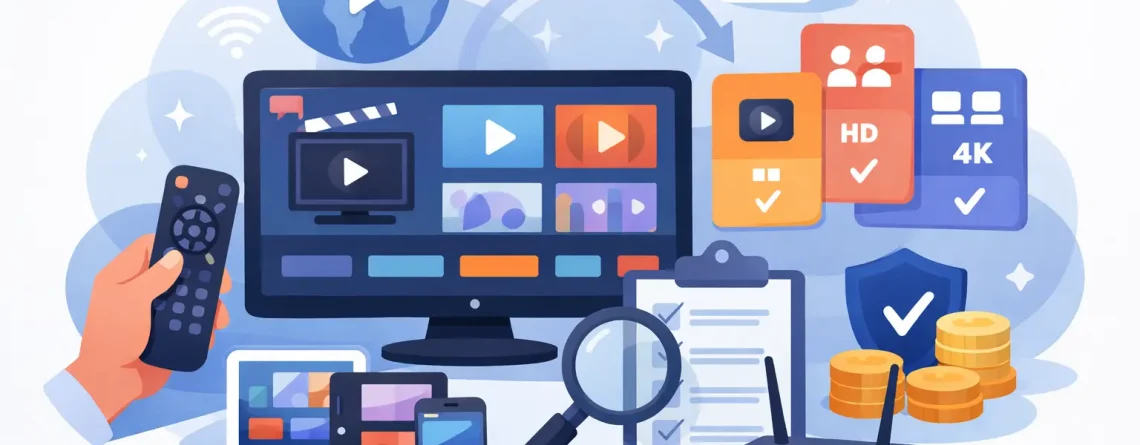
Cable bills usually look manageable until the add-ons hit, the sports package shows up, and every extra screen costs more. That is exactly why an IPTV subscription plan guide matters. If you want more channels, more device freedom, and a lower monthly cost, choosing the right IPTV plan can save real money without making your setup harder.
The best plan is not always the cheapest one on the page. It is the one that matches how your household actually watches TV. Some people need a short-term option for testing. Others want a long-term deal with the lowest monthly cost. Some families need multiple connections at once, while solo viewers just want solid HD channels on one screen. The right choice comes down to usage, not hype.
How to use this IPTV subscription plan guide
Start with one simple question: how many people will be streaming at the same time? That answer eliminates a lot of bad choices right away. If you live alone and mostly watch on one TV, a basic option may be enough. If your home has sports on the living room screen, cartoons on a tablet, and movies on a bedroom TV, connection count becomes a deal-breaker.
Next, look at time commitment. Short plans make sense if you want to test channel quality, app compatibility, and stream stability before spending more. Longer plans usually offer stronger value, especially for households that already know they want to cut the cable bill for good. Paying less per month over a longer term is smart only if the service fits your routine.
Then check content fit. A plan can look impressive on paper and still be wrong for you if it misses local channels, international programming, or the sports coverage you actually watch. Big channel counts sound great, but useful channel access is what matters.
What really matters in an IPTV plan
Price gets attention first, and fair enough. Most buyers are here because traditional TV costs too much. But a low price alone is not a win if the plan limits devices, offers weak support, or makes setup a hassle. Real value is a mix of cost, convenience, and viewing flexibility.
Channel selection should be broad enough for the whole household. That usually means live TV, sports, movie channels, kids’ content, and international options. If you speak more than one language at home or want access to channels from outside the US, this part matters even more. A plan that covers worldwide programming can replace several separate subscriptions at once.
Device compatibility is another major factor. A strong IPTV service should work across smart TVs, phones, tablets, laptops, and streaming devices without turning setup into a weekend project. Fast activation also matters. Most buyers do not want forms, technician visits, or waiting around. They want to sign up, receive credentials, and start watching quickly.
Support matters more than people think. TV problems always seem to show up right before the game starts or during family movie night. Responsive customer service can be the difference between a quick fix and a canceled plan.
IPTV subscription plan guide for households
If you are shopping for one person, keep it lean. A shorter plan with fewer connection needs is often the smartest starting point. It gives you room to test stream quality, see how the app performs on your devices, and decide whether the channel lineup matches your habits. For light users, flexibility matters more than maximum scale.
For couples or smaller households, the sweet spot is usually a mid-tier plan with more than one connection. That avoids the annoying problem of one person getting kicked off because someone else started watching in another room. You do not need to overbuy, but you do want enough breathing room.
For larger families, multi-connection plans are where IPTV starts beating cable by a mile. When several people want different content at the same time, a plan with high simultaneous connection limits can deliver serious value. This is where affordability and convenience stop being marketing claims and start becoming practical household benefits.
Travelers and part-time users should think differently. If you move between homes, travel often, or only want coverage for a season, a short-term subscription can make more sense than chasing the lowest annual rate. Flexibility has value too.
Short-term vs long-term plans
Short-term plans are built for testing and low-risk entry. They let you check stream reliability, browse the channel lineup, and confirm device support before committing. If you are switching from cable for the first time, that can be the smartest move.
Long-term plans are about price efficiency. If the service performs well and covers what you need, an extended subscription often drops the effective monthly cost. For budget-focused households, that is a strong advantage. You get more entertainment access while keeping spending under control.
The trade-off is simple. Short plans cost more per month but give you flexibility. Long plans cost less per month but make more sense after you know the service works for your setup. Neither is automatically better. It depends on confidence, usage, and budget.
Don’t ignore connection limits
This is the detail buyers skip, then regret later. A plan may advertise huge content access, but if it only fits one active stream and your home needs several, frustration comes fast. Simultaneous connections should match your real life, not your best guess.
Think about busy hours in your home. If one person watches live sports, another streams a series, and someone else uses a tablet in another room, you need a plan that can handle that without conflict. More connections usually mean more freedom and less household friction.
For many buyers, this is the feature that separates a decent service from a truly practical one. A provider that supports up to 10 connections is built for modern households, shared screens, and nonstop viewing across devices.
Channel count is nice. Channel quality is better.
A giant library looks great in a sales pitch, but quality still wins. You want stable playback, HD availability, fast loading, and categories that are easy to navigate. That matters more than bloated numbers nobody will ever use.
Sports fans should pay close attention here. If live events are your priority, look for a plan that treats sports as a core feature, not an afterthought. Movie fans should check premium-style entertainment coverage. Families should think about local channels, general entertainment, and content variety across age groups.
International access is another major plus for many North American homes. The right plan can bring together US channels and global programming in one place, which makes it far more useful than a narrow live TV bundle.
Setup should be fast, not complicated
A good IPTV experience starts before the first stream. Sign-up should be simple. Activation should be quick. Delivery of login details should happen without delays. If a service claims convenience, it should prove it right away.
That is one reason many buyers prefer direct online activation. No contract drama. No waiting for hardware appointments. No complicated installation path. Just choose a plan, receive your access details, and get started.
Crypto PAY IPTV leans into that speed-first model, which is exactly what budget-conscious viewers want. Fast setup and broad device support are not extras anymore. They are part of the standard buyers expect.
How to pick the right plan fast
If you want the shortest path to a good decision, focus on four things: how long you want to commit, how many connections you need, whether the channels fit your household, and how quickly you can start. That is the core of any smart buying decision.
Do not get distracted by flashy claims alone. Match the plan to your actual usage. A solo viewer does not need a family-sized package. A five-screen household should not gamble on a one-connection plan. The best deal is the one you will actually use without limits getting in the way.
Price matters. Speed matters. Convenience matters. But fit matters most. When an IPTV plan lines up with your devices, your channel preferences, and your budget, the value becomes obvious from day one.
If you are ready to cut the cable bill without cutting your entertainment, choose the plan that matches your real viewing habits and start there. The smartest move is not buying the biggest package. It is buying the right one, right now.










Leave a Reply